

Sterility is a key requirement for surgical instruments because contaminated instruments can risk healthcare-related infections and compromise patient safety. Surgical instrument sterility is important for patient safety. Hospitals and healthcare facilities follow strict sterilization protocols, sterility can be compromised during transportation from the manufacturer or sterilization facility to the desired location in the hospital. It is important for hospitals, distributors and medical equipment buyers to understand how the surgical instruments lose sterility. This will help make the right choice.
What are Surgical Instruments?
Surgical Instruments are specialized medical devices designed to perform specific tasks during surgical and medical procedures. They include-
- Scissors
- Forceps
- Retractors
- Clamps
- Needle Holders
- Scalpels
- Probes
- Surgical sets and more
Why Do Surgical Instruments Lose Sterility during Transportation?
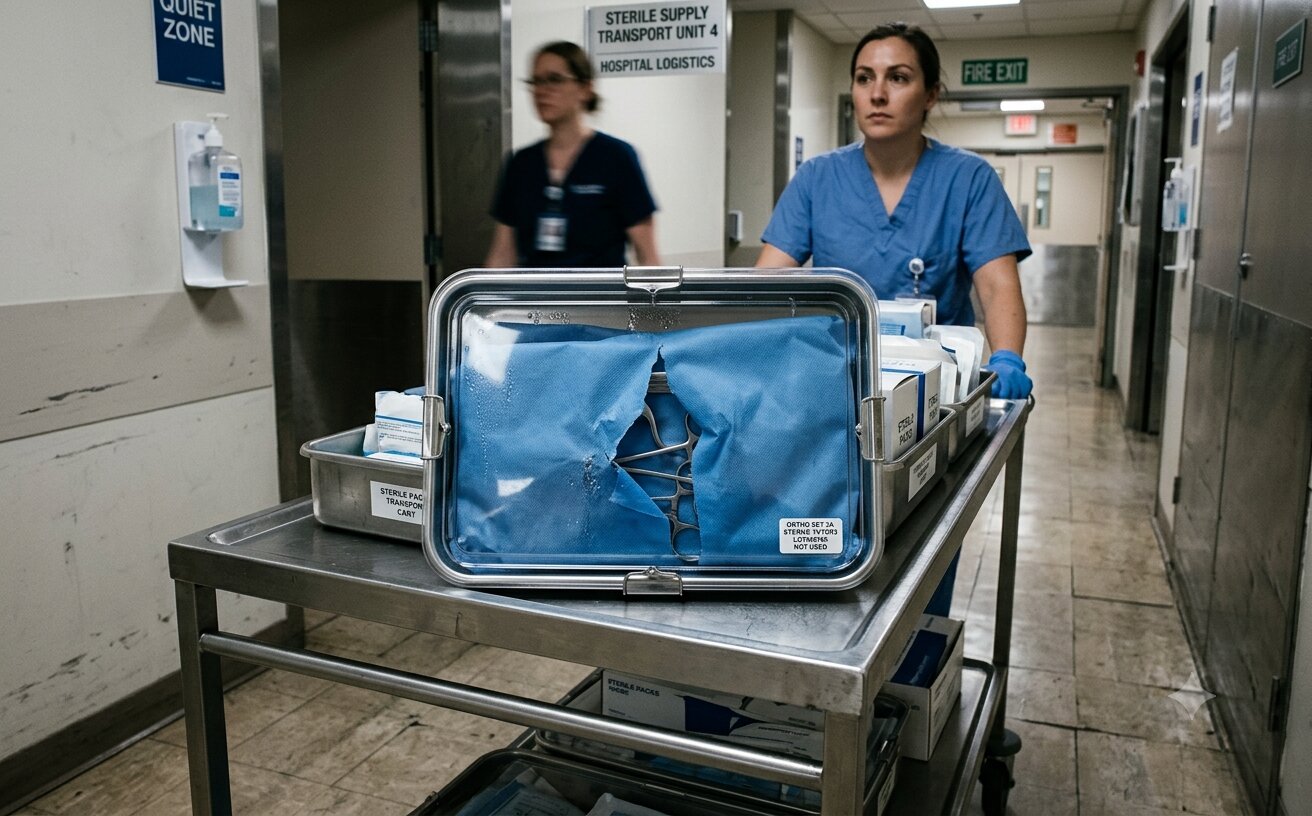
- Damaged or Inadequate Packaging: Packaging is one of the most important safeguards for maintaining sterility. If the sterile packs are crushed, punctured, torn or improperly sealed during transportation, microorganisms can enter the sterile barrier. Also, if the instruments are handled roughly, are excessively stacked or are not packed properly, this can increase the possibility of damage. A good medical instrument supplier uses appropriate packaging based on the instrument type, weight, configuration, and expected transportation conditions.
- Moisture and Condensation: Moisture is another important Surgical instrument sterility transportation risk. Sterile packaging that becomes wet may no longer provide the same level of protection against microbial contamination. Temperature changes during transportation can create condensation, particularly when instruments move between environments with different temperatures and humidity levels. Wet packaging should be treated as a potential sterile barrier compromise. The best surgical instrument manufacturers properly dry instruments before packaging; using suitable packaging materials to protect from rain or excessive humidity can reduce this risk.
- Improper Handling and Transportation: Sterile instrument contamination can be caused by improper handling. The instruments can be exposed to unwanted risks when the boxes are dropped, dragged, compressed, or stacked incorrectly. Excessive vibration during road transportation can also damage delicate packaging or instrument parts. When sterile packs are transported with heavy products or placed directly on the floor or on other contaminated surfaces, poor handling becomes a concern. A professional medical equipment supplier follows clear protocols for loading, unloading and movement of sterile products.
- Poor Storage and Environment Conditions: Contamination of surgical instruments can occur due to poor storage and environmental conditions. When the sterile instruments are stored incorrectly before and after transportation, sterility can be compromised. Exposure to dust, excessive humidity, temperature fluctuations, direct sunlight, pests or contaminated surfaces can increase the risk of sterile barrier deterioration. It is important that the medical supplier and hospitals have clean, dry, protected and organized storage areas to reduce unwanted handling. Do not store sterile packages in a way that creates excessive pressure or causes them to become crushed.
Case Study
Consider a hospital that regularly receives sterile surgical instrument sets from an external supplier. The CSSD team noticed several packages arrived with crushed corners, loose seals and signs of moisture after long-distance transportation. The instruments were packed correctly before dispatch; the condition of the sterile barriers created concerns during receiving inspection. The hospital management worked with a professional medical equipment supplier to identify transportation-related issues. The supplier introduced stronger protective outer packaging, separated heavier instrument sets to reduce compression, improved moisture protection and provided clearer handling instructions for logistics teams. The hospital procurement team was encouraged to inspect packaging integrity before accepting sterile products.
After these changes, the hospital experienced fewer packaging-related concerns during receiving. This case study highlights that a key aspect of maintaining sterility is supply chain responsibility, not just sterilization responsibility. A professional and experienced supplier can support hospitals by blending appropriate instrument manufacturing, packaging controls, quality checks, documents and transportation practices.
How can hospitals reduce the risk of contamination during transportation?
- Choose the suppliers with established quality management and sterile packaging procedures
- Inspect sterile packaging immediately on receipt
- Check if there are any tears, punctures, wetness, broken seals, crushing or other visible damage
- Maintain appropriate storage conditions after receiving the instruments
- Train the staff involved in handling and transportation of sterile products
- Establish clear SOPs for products with compromised packaging
- Maintain appropriate documentation and traceability throughout the supply chain.
How to choose a surgical instrument supplier?
A supplier must be evaluated on more than instrument price and product range. Hospitals and distributors should consider manufacturing quality, material specifications, dimensional accuracy, finishing, packaging practices, quality control systems, traceability documentation and after-sales support.
If you are reusing the instruments, consider whether the instruments are designed to withstand the intended cleaning, disinfection, sterilization, handling and reprocessing cycles. A reliable medical instrument manufacturer and supplier explains how their products are protected from manufacturing through packaging and transportation.
The Causes of surgical instrument contamination are not only the failure of sterilization process. In many cases, the risk arises because the sterile barrier is damaged or exposed to unsuitable environmental or handling conditions during transportation. For hospitals, surgical centres, distributors, and healthcare procurement teams, choosing a dependable surgical instrument manufacturer or supplier is an important part of supply-chain quality management. Appropriate packaging, careful handling, moisture protection, suitable storage, inspection and traceability can help reduce transportation-related risks. Choose a supplier to navigate surgical instrument infection control, as they focus on product quality, packaging integrity, quality control and reliable supply chain practices. Contact an experienced surgical instruments manufacturer to discuss your requirements and build a safer and more dependable procurement process.
FAQs
- How do surgical instruments become contaminated during transport?
Surgical instruments can become contaminated during transport if they are not handled properly, if packaging is damaged, if they are exposed to dust or moisture, or if they come into contact with contaminated surfaces. United Poly, the professional medical equipment supplier, has SOPs for transportation that prevents the instruments from getting contaminated. - Can moisture affect sterility of surgical instrument?
Yes, wet or moisture-damaged sterile packaging can compromise the sterile barrier and should be evaluated according to established procedures. - How to choose a reliable surgical instrument supplier?
Evaluate the supplier’s manufacturing quality, packaging controls, quality management practices, documentation traceability and promises of safe transportation and handling. United Poly checks all these boxes.
About the Author
United Poly is a trusted manufacturer, supplier and exporter of the best quality medical equipment and hospital equipment, backed by more than 30 years of industry experience. The brand is dedicated to delivering reliable, durable and innovative healthcare solutions designed to meet the evolving requirements of hospitals and medical facilities. With certifications and regulatory credentials including ISO 9001:2015, 13485: 2016, FDA and CE, United Poly maintains a strong focus on quality, safety and reliability.